


Roadside Assistance Platform
As a Senior UX Designer, I focused on streamlining the roadside assistance experience by identifying and removing friction points in the service request flow. My approach centered on reducing cognitive load for users in high-stress situations through an intuitive interface. By optimizing and simplifying data entry, we significantly aimed to increase accuracy in pricing and ease of dispatching.
Insurance-Adjacent Startup Agents Struggled with Multitasking
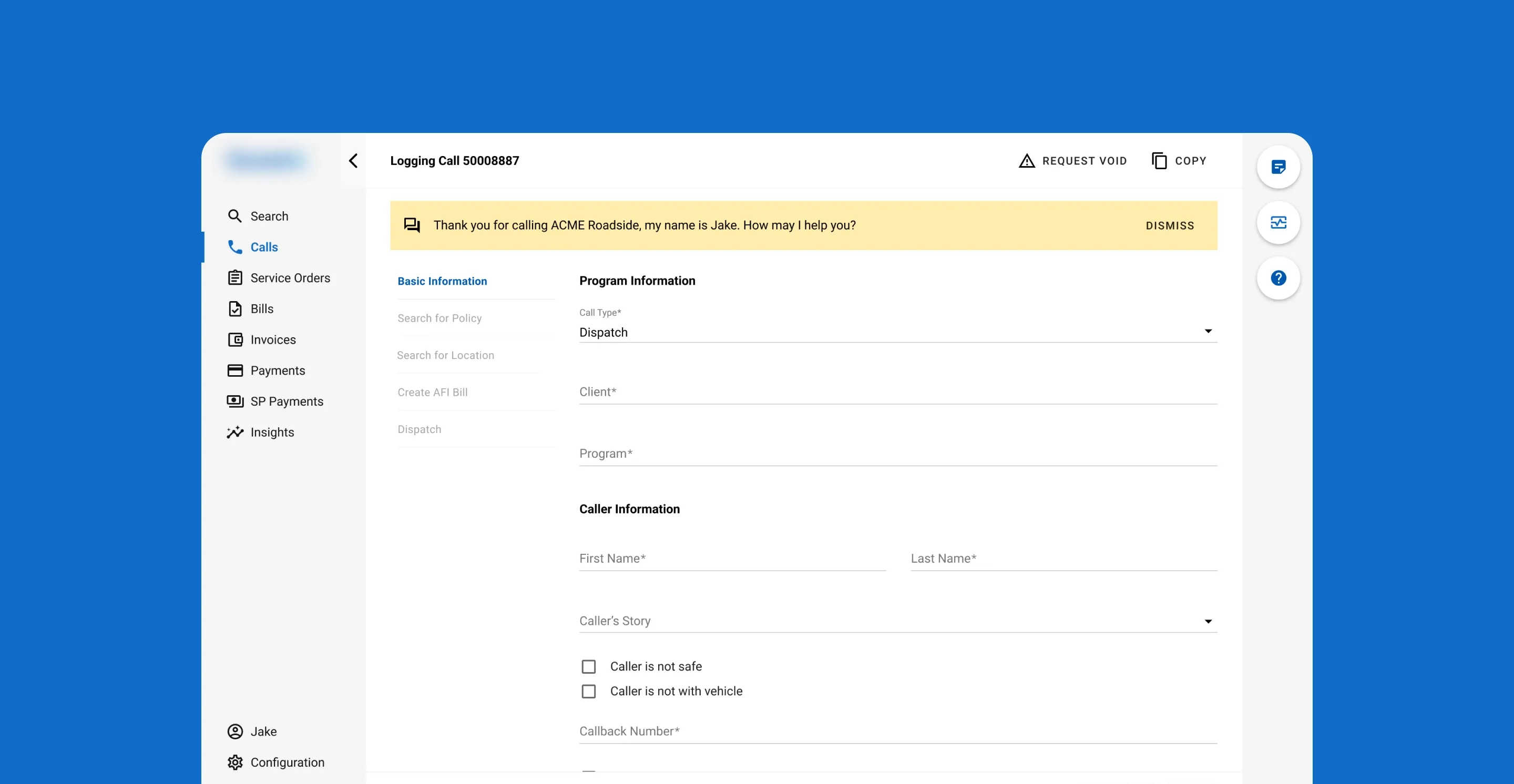
This startup client ran a road assistance operation call center. Supporting many customers across the country, representatives needed simple systems that would allow them to do their job faster and more accurately. Agents struggled to multitask while assisting clients in emergency situations. The legacy system was bloated, lacked a cohesive flow, and required agents to navigate multiple screens to provide real-time information.

Witnessing the Chaos
In collaboration with subject-matter experts (SMEs), I conducted an extensive review of customer calls. This research provided critical insights into agent pain points and revealed opportunities for design-led improvements in real-time workflows.

Giving Agency to the Agents
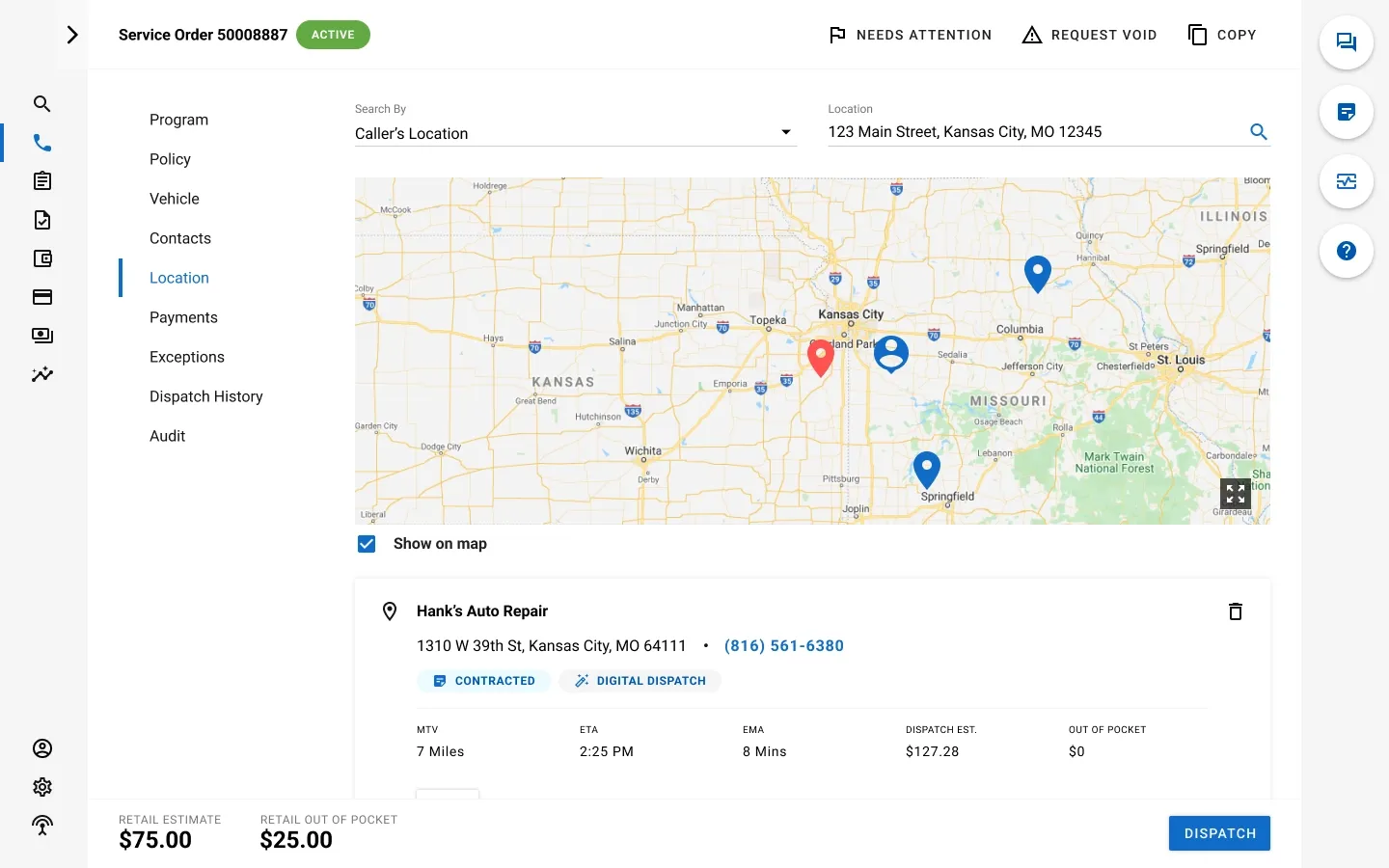
I designed a centralized platform that empowered agents by simplifying information architecture. The solution consolidated disparate data into a single interface, allowing agents to hide non-essential UI elements and focus on customer needs. Additionally, I integrated a scripted guidance feature to ensure professional and calm communication during every call.
My Role
Lead Designer
Bridged technical constraints with human needs. I translated complex call center workflows into a streamlined interface that solved critical usability and real-time operational challenges.
Researcher
Conducted third-person contextual research on agent workflows to uncover subconscious workarounds. By identifying friction points that agents had internalized over time, I turned qualitative insights into direct workflow optimizations.
Accessibility Advocate
Championed inclusive design across every touchpoint. I ensured all interface components met WCAG 2.1 AA standards for visual clarity, high contrast, and keyboard navigation in fast-paced call center environments.
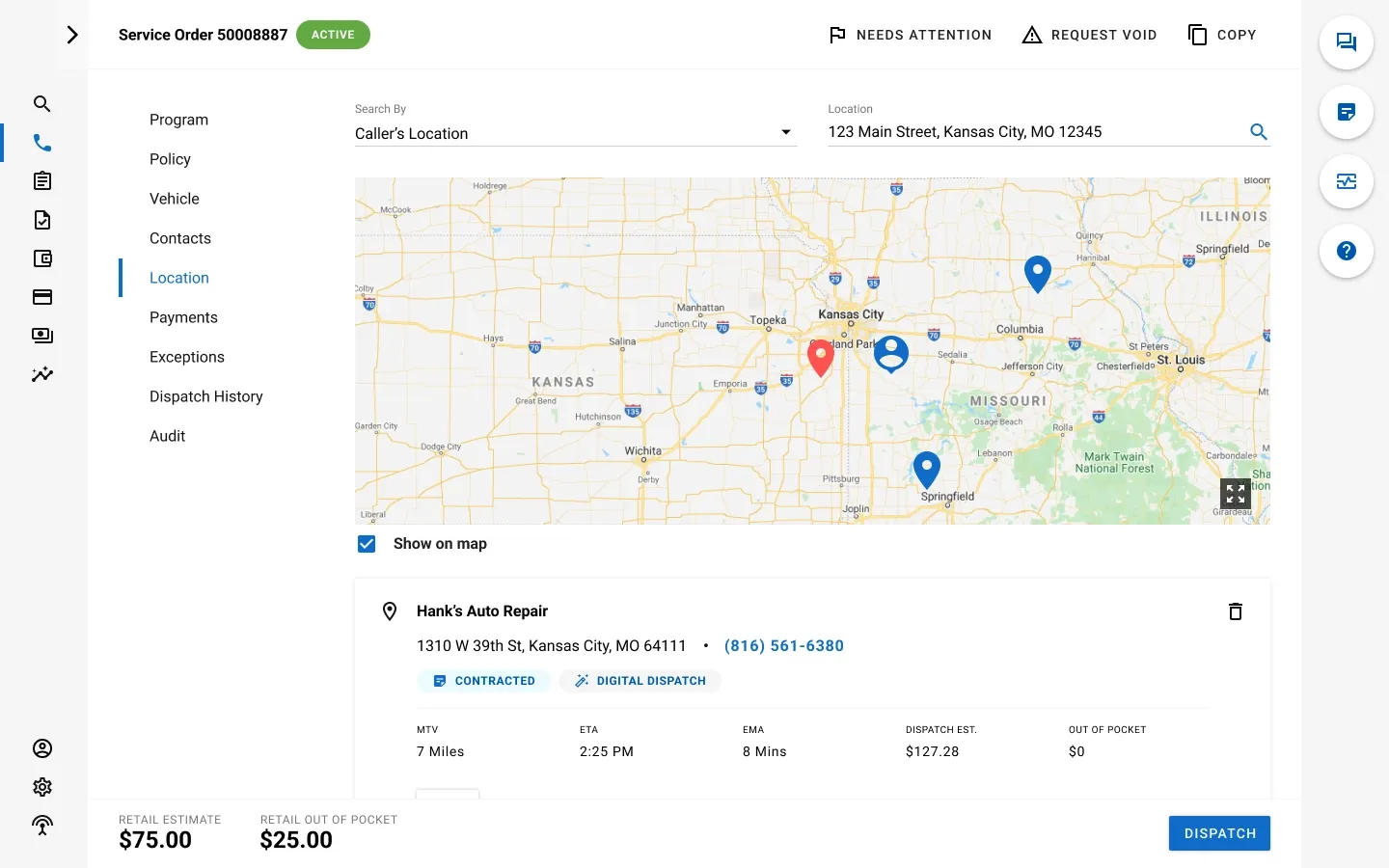
UI Can Drive Efficiency in High-Pressure Contexts
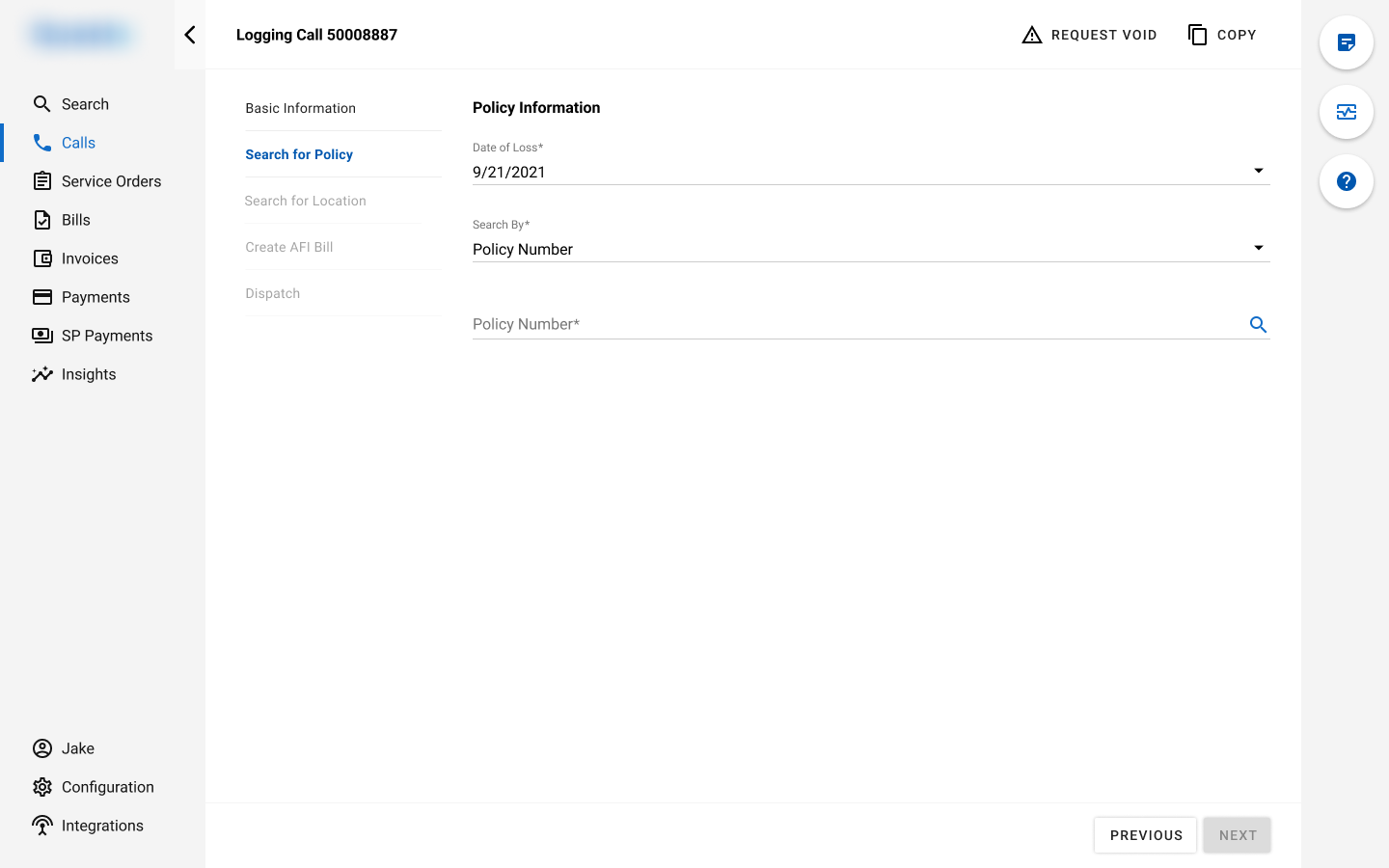
This project underscored the critical importance of user-centered design in high-pressure environments. When users are operating under significant stress, every second and every click counts. By prioritizing the agent's mental model and stripping away unnecessary complexity, we demonstrated that design can be a powerful tool for maintaining professional standards and operational success in demanding real-time scenarios.
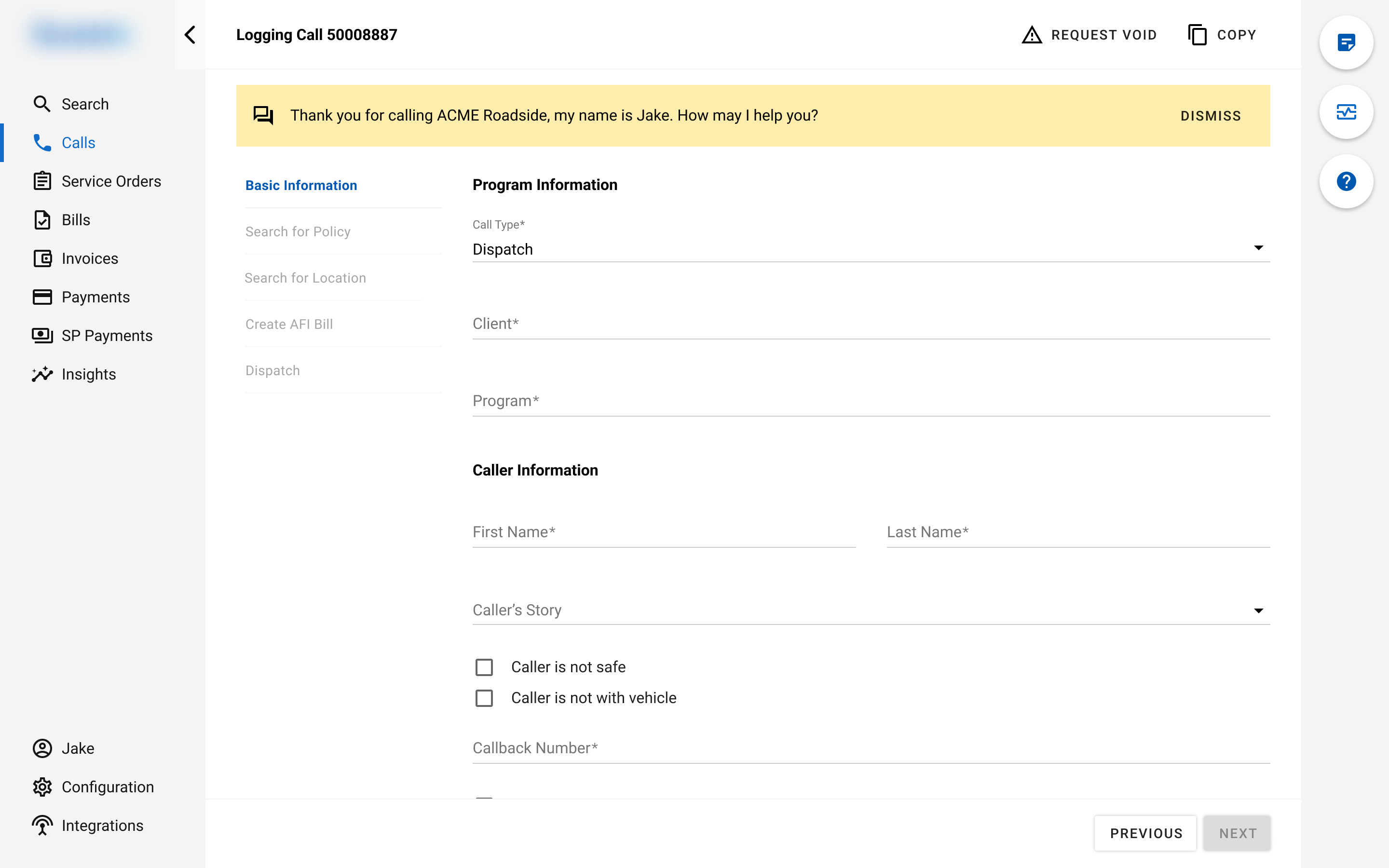
Improving Efficiency and Stress
As designed, this platform's intent was to significantly improve operational efficiency. The proposed design aimed to improve dispatch times by streamlining the data entry process and reducing friction. Furthermore, the design was expected to reduce agent stress and cognitive burden by replacing complex legacy navigation with a more intuitive interface, though the concept was never moved into final implementation.

Other Work
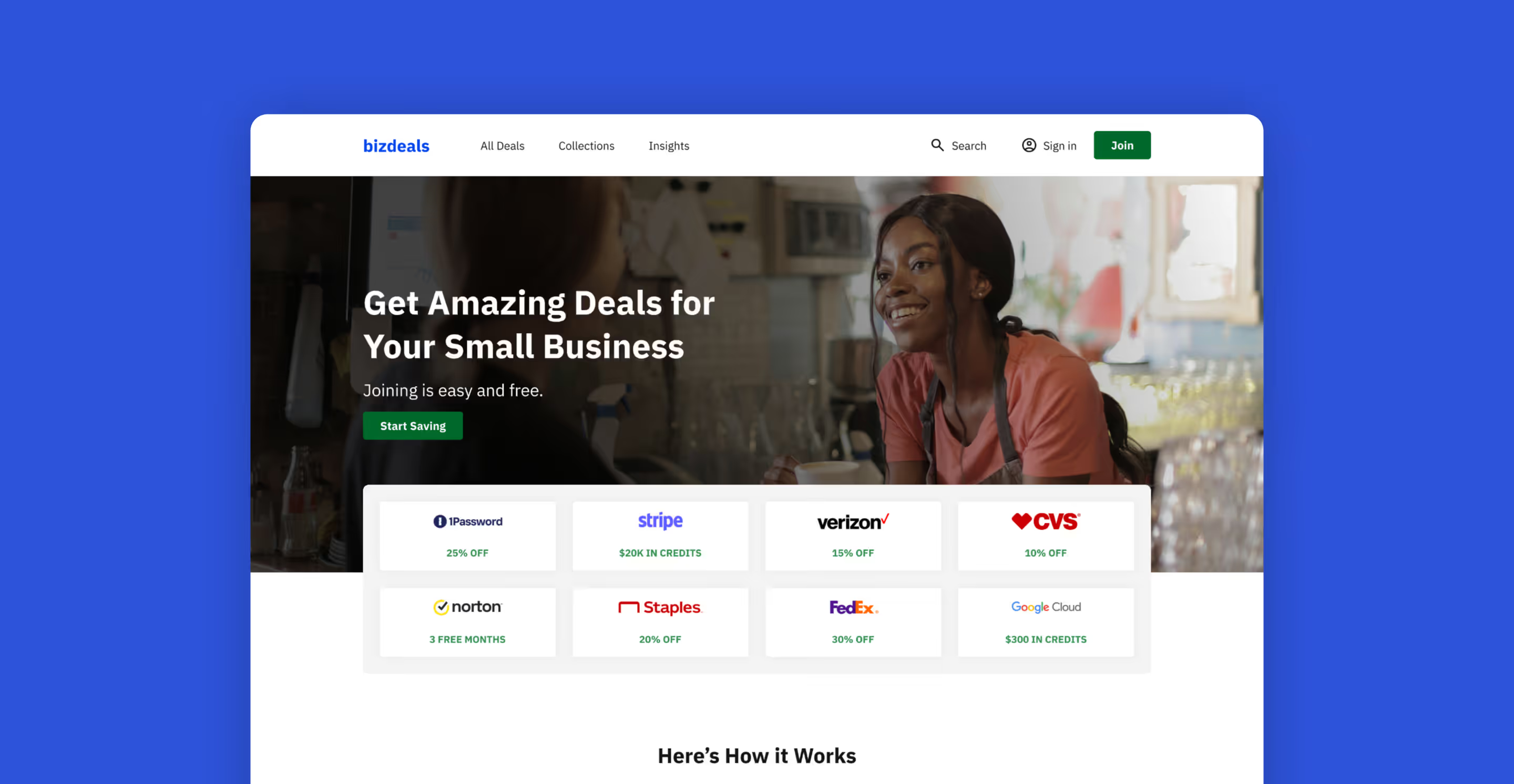
Business Deals Platform
Played a key role in scaling the platform from 100,000 to 3 million registered users by leading user-centered design initiatives. Conducted in-depth user research to identify pain points and opportunities, driving the creation of new features that enhanced engagement and usability.
Debt Assessment Tool
Worked on designing new features that would increase efficiency at this startup by increasing engagement and leads. These newly designed features yielded incredible results for the client.